
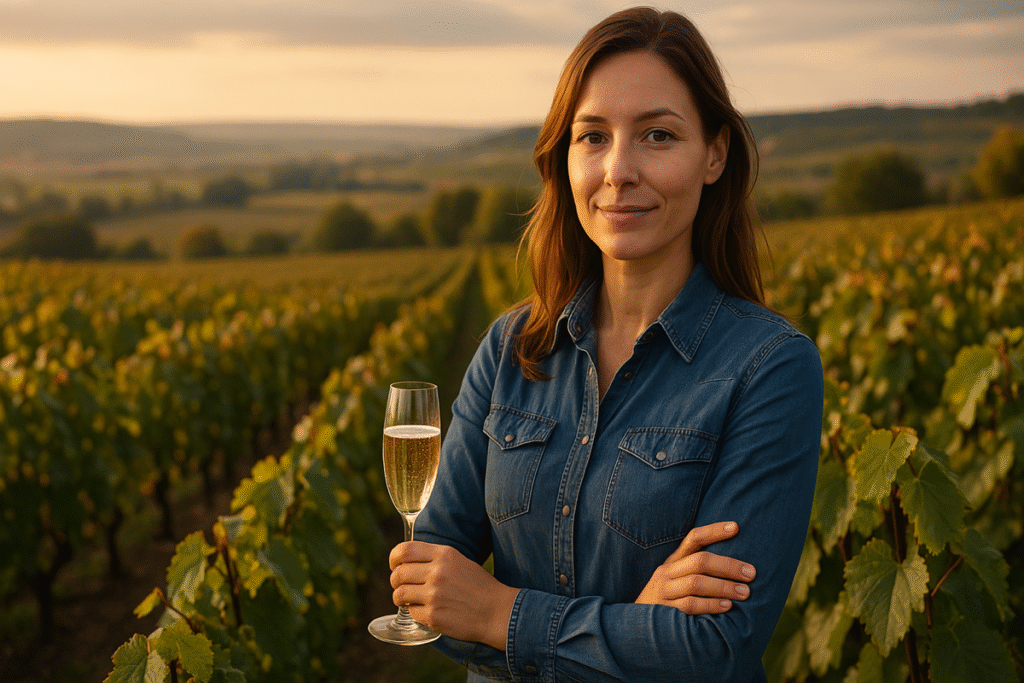
The Champagne vineyard, famous worldwide for its prestigious bubbles, is undergoing a significant metamorphosis, driven by the growing involvement of women. At the heart of this transformation, iconic figures stand out, shedding new light on this traditionally male domain. The numbers speak for themselves: nearly 40% of vineyards in Champagne are now managed by women, a remarkable rate compared to other wine regions and even at the national level. This change goes beyond statistics; it embodies an evolution of mindsets and practices within a sector in full transition. Through their involvement, these women are not just taking over; they are reinventing wine, marketing, and even the vision of Champagne. These pioneers bring a fresh breath, combining tradition and innovation, and open the way to a bright future.
Women winegrowers: an essential role in the development of the Champagne vineyard
Viticulture in Champagne has always been marked by important female figures, but their role is gaining unprecedented significance. Historically, women have been omnipresent in the wine world, whether as wives, mothers, or full-fledged winegrowers. Today, their presence is asserting itself and this is reflected in the very structure of wine estates. A study conducted by sociologist Océane Carneiro highlights this dynamic by comparing the situation in Champagne to other French wine regions.
In the Champagne region, women hold key positions at all levels of the production chain, from vine cultivation to bottling. This variety of roles is accompanied by a new approach marked by skills such as oenotourism, organic farming, and modern marketing strategies. These women bring not only their expertise but also a different sensitivity, influencing the way products are perceived by consumers. Thanks to their training and diverse experiences, they successfully integrate these concerns into their estates.
The key factors in their rise
Behind this feminization of the vineyard lies a set of historical, economic, and sociological factors. During World War II, women found themselves at the head of estates in the absence of mobilized men. This phenomenon initiated a process of reclaiming fieldwork and left a lasting impression. The election of women to leadership positions within Champagne Houses, such as Maison Veuve Clicquot or Champagne Taittinger, consolidates this movement.
- Transmission of family estates, encouraged by the restriction of inheritances exclusively to males.
- Increased access to higher education and viticulture training, enabling skill development.
- Creation of support networks among women winegrowers that facilitate the exchange of best practices.
These factors converge to make Champagne the most feminized vineyard in France, with revealing statistics: nearly 40% of estates are managed by women compared to only 26% elsewhere in France. This evolution continues to inspire diversification projects and exciting innovations within the sector.
| Year | Percentage of women heads of estates in Champagne | National percentage in France |
|---|---|---|
| 2020 | 35% | 25% |
| 2021 | 36% | 25% |
| 2022 | 38% | 26% |
| 2023 | 39% | 26% |
| 2025 | 40% | 26% |
The role of women in the Champagne vineyard is not limited to mere figures; it also carries profound human values. Solidarity, community spirit, and a strong commitment to sustainable practices are elements that shape the identity of estates managed by women. Their influence on the territory nourishes not only the vineyard but also social relations, cultural exchanges, and a better integration of eco-responsible practices.
Women’s Champagnes: a unique and diversified offer
Women’s Champagnes stand out for the emotional commitment and authenticity that drive them. Whether in winemaking, land management, or promoting family values, each bottle tells a story. With the rise of women in the vineyard, many houses have emerged, driven by female passion for Champagne. Brands such as Champagne Perrier Jouët or Champagne Larmandier-Bernier are emblematic of this new era where women flourish in a traditionally male field.
The quality of these champagnes also reflects a deep respect for the raw material and the environment. These women winegrowers emphasize organic or biodynamic viticulture methods, as well as a respectful approach to terroirs, ensuring authentic productions that reflect their commitment. Their contribution to the renown of Champagne is undeniable, both for the quality of the wines and their impact on the international market.
Emblematic examples of houses led by women
The richness of the Champagne vineyard relies on its diversity. Within this mosaic, several houses led by women have made a name for themselves:
- Champagne Krug: this prestigious house, founded in 1843, has seen its reputation refined thanks to the drive of talented women.
- Champagne Roederer: known for its bold choices, this house combines tradition and innovation under the expertise of women in strategic positions.
- Champagne Bollinger: the family heritage and entrepreneurial spirit of its leaders continue to influence its success.
- Champagne Laurent-Perrier: one of the first houses to dare blanc de blancs, guided by visionary women.
The innovations brought by these women, through winemaking methods more mindful of the environment, demonstrate their ability to reconcile tradition with modernity. They strive to prove that buying Champagne is not just a festive drink, but also a true cultural and emotional expression.
| Champagne House | Leader | Year of founding | Specialty |
|---|---|---|---|
| Champagne Laurent-Perrier | Christelle Lemaire | 1812 | Creation of innovative cuvées |
| Champagne Taittinger | Vitalie Taittinger | 1932 | Barrel aging |
| Champagne Veuve Clicquot | Victoria Clicquot | 1772 | Innovations in winemaking methods |
| Champagne Roederer | Julia Cadiou | 1776 | Exceptional quality and terroirs |
Women’s Champagnes do not just compete with other major brands. They bring an additional dimension to the wine world, inviting consumers to engage in a responsible approach. This commitment to sustainability and biodiversity contributes to their success, making champagnes from these houses popular on international markets.
The impact of women on Champagne culture and society
The rise of women in the vineyard has significant repercussions beyond the wine sector alone. By incorporating modern values into production, they not only create quality products but also heal long-standing social rifts. This renewal is accompanied by a commitment to sustainable development, reflecting growing concerns of contemporary consumers.
Women winegrowers are involved in local initiatives, promoting job creation and support for small estates. Their presence allows a rethinking of dynamics within Champagne villages, where relationships among producers, consumers, and institutions are reshaped around mutual respect and solidarity. Freedom of expression, inclusion, and innovation are values that strongly resonate within their community.
Their social and economic contributions
Their social commitment goes beyond simple wine production. Several women position themselves as agents of change in initiatives such as:
- Awareness of oenotourism, offering visitors an enriching and immersive experience in the world of Champagne.
- Training and workshops raising awareness of sustainable and environmentally friendly practices.
- Collaboration with educational institutions to promote viticulture among younger generations, integrating programs on sustainable agriculture.
This creates an environment where values of sharing, transmission, and solidarity between generations can flourish. Each additional percentage of women heads of estates represents an opportunity to collectively improve viticultural culture while propelling Champagne towards the future.
| Initiative | Description | Impact |
|---|---|---|
| Oenotourism training | Workshops aimed at educating visitors about wine | Increase in visits and champagne sales |
| Sustainable education | Collaboration with schools to raise environmental awareness | Inclusion of sustainable viticulture in school curricula |
| Support for small estates | Support networks among women winegrowers | Improved economic resilience of estates |
Women winegrowers do not only change how wine is produced; they also reshape Champagne society as a whole. By injecting new energy and a forward-looking vision, they enable a renewal of practices and dynamism benefiting the entire region and beyond.
Frequently asked questions about the role of women in the Champagne vineyard
- What is the percentage of women heads of estates in Champagne?
Nearly 40% of vineyards in Champagne are managed by women, which is higher than the national average of 26%. - How do women influence the wine sector?
They bring diverse skills, commit to sustainable practices, and innovate in marketing and production. - Which Champagne houses are led by women?
Among notable houses are Champagne Doyard, Champagne Roederer, Champagne Krug, and Champagne Veuve Clicquot. - What challenges do women face in the wine sector?
Although their numbers are increasing, they may face prejudices or challenges related to managing family estates. - How is the Champagne vineyard evolving today?
Champagne is moving towards more sustainable practices and product diversification, increasingly integrating the impact of women in this evolution.