
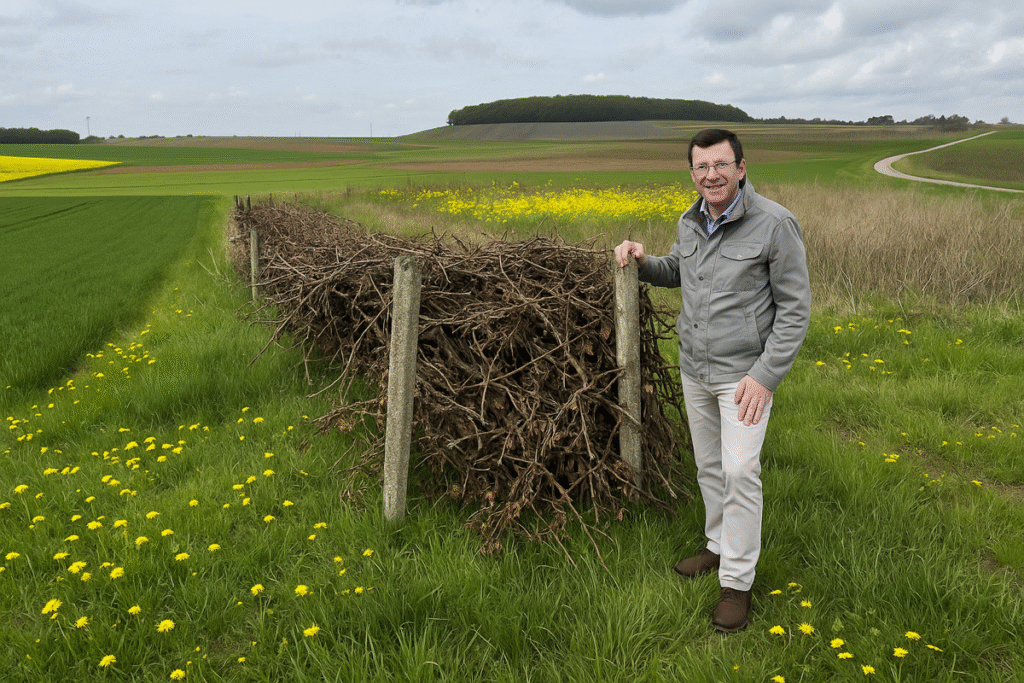
# Dead Wood: How Champagne Winemakers Use Dead Hedges to Promote Biodiversity
What is Dead Wood?
The term “dead wood” refers to branches and tree trunks in decomposition intentionally left in a natural environment. This wood, often considered worthless, actually plays a crucial role in preserving biodiversity. It provides essential habitat for many species, notably insects, fungi, and microorganisms that depend on this ecosystem to survive and thrive.
In Champagne, the integration of dead wood into the vineyard landscape is a practice that is gaining popularity. Winemakers use it to enrich the soil, improve water retention, and offer habitat to beneficial species. Dead wood is more than just natural waste; it is a valuable resource that can transform a vineyard into a true sanctuary for nature.
Champagne winemakers adopt this approach not only for its ecological benefits but also for its ability to boost vineyard resilience in the face of climate change. By leaving dead wood on their lands, they create a more balanced environment capable of supporting rich and diverse biodiversity.
Importance of Dead Hedges in Viticulture
Dead hedges, made up of stacked branches and dead wood, are an ancient landscape management method that offers many advantages to winemakers. In Champagne, they are used to delimit plots, protect crops against wind, and shelter a multitude of animal and plant species.
The importance of dead hedges lies in their ability to serve as ecological corridors. They allow the movement of wild species between different parts of the vineyard, thus promoting pollination and natural pest control. By restoring these corridors, winemakers contribute to the overall health of the vineyard ecosystem.
Moreover, dead hedges play a crucial role in reducing soil erosion. By stabilizing the ground with their dense structure, they preserve soil quality, an essential factor for producing quality wine. Thus, dead hedges are not only an ecological asset; they are also an investment in the sustainability and quality of the vineyard.
Impact of Dead Hedges on Biodiversity
Dead hedges provide vital habitat for a variety of species, from pollinating insects to birds and small mammals. This microhabitat plays a fundamental role in maintaining biodiversity by offering food, shelter, and breeding sites for numerous creatures.
In Champagne, the positive impact of dead hedges on biodiversity is evident. Birds, for example, use these structures to nest and protect themselves from predators. Insects, for their part, find in the dead hedges an ideal refuge to reproduce and contribute to the pollination of the vines. This symbiotic interaction enriches not only the local ecosystem but also improves agricultural productivity.
The return of biodiversity thanks to dead hedges creates a more resilient environment in the face of climatic disturbances. By fostering diverse fauna, winemakers strengthen their lands’ ability to adapt to changes, thus reducing their dependence on chemical interventions. This is part of a broader sustainable viticulture approach aimed at harmonizing production and conservation.
Sustainable Viticulture Techniques in Champagne
Champagne is at the forefront of sustainable viticulture, integrating practices that respect the environment while producing exceptional wines. Among these techniques, the use of dead hedges and dead wood is essential to maintain the ecological balance of vineyards.
Crop rotation, inter-row grassing, and the use of natural compost are other strategies implemented to enrich the soil and reduce erosion. These methods also help minimize the vineyards’ carbon footprint by limiting the use of chemical fertilizers and pesticides. Thanks to these innovations, Champagne winemakers can produce wines that fully reflect the richness of their terroir.
Local cooperatives and networks of winemakers play a crucial role in disseminating these sustainable practices. Through training and experience sharing, they encourage the adoption of environmentally respectful methods, thus strengthening Champagne’s reputation as a pioneering region in sustainable viticulture.
Ecological Benefits of Dead Hedges for Winemakers
Integrating dead hedges into Champagne vineyards offers a multitude of ecological advantages. First, these natural structures contribute to water regulation by improving water infiltration into the soil, which is crucial for vine health. During drought periods, dead hedges help maintain stable moisture, thus reducing water stress on plants.
Additionally, dead hedges act as a natural barrier against pests. By sheltering natural predators, such as insectivorous birds and small mammals, they help keep pest populations under control. This reduces the need to use pesticides, contributing to a cleaner and safer environment for wine production.
Finally, dead hedges promote nutrient recycling. Decomposing wood enriches the soil with organic matter, thus improving its structure and fertility. This soil improvement results in more vigorous vines and better-quality grapes, which is essential to maintaining Champagne wines’ renowned reputation.
Case Studies: Champagne Winemakers and Dead Hedges
Several winemakers in Champagne have successfully adopted dead hedges, demonstrating their effectiveness in promoting biodiversity and vineyard sustainability. Take, for example, the Pierre Martin estate, which integrated this technique about ten years ago. Since then, he has observed a notable increase in local wildlife, especially pollinating insects and birds.
Another example is the Maison Delacroix, which used dead hedges to create ecological corridors throughout its plots. This approach not only improved biodiversity but also strengthened the resilience of its vines against extreme climatic conditions. Dead hedges played a crucial role in reducing yield losses caused by pests.
These case studies illustrate how dead hedges can be successfully integrated into viticultural practices to achieve positive ecological and economic outcomes. They show that these techniques are not only beneficial for the environment but can also contribute to the economic sustainability of wine estates.
How to Integrate Dead Hedges into Vineyards
To effectively integrate dead hedges into a vineyard, careful planning of their location and structure is essential. Hedges should be placed strategically to maximize their efficiency as ecological corridors and windbreaks. It is advisable to install them along plot boundaries or between vine rows.
Maintenance of dead hedges is also crucial to ensure their effectiveness. It is important to regularly enrich them with dead wood and branches while ensuring they do not become a refuge for harmful species. Regular monitoring helps ensure that the hedges remain beneficial for biodiversity and vine health.
Moreover, collaboration with biodiversity experts or local associations can provide valuable advice to optimize the impact of dead hedges. These partnerships can also offer training and funding opportunities for winemakers wishing to adopt these sustainable practices.
Future Perspectives for Biodiversity in Champagne
The future of biodiversity in Champagne relies on the continued adoption of sustainable viticultural practices, such as the use of dead hedges. As environmental challenges, including climate change and loss of natural habitats, continue to grow, it is imperative that the region remains at the forefront of ecological innovation.
Dead hedges, as a key element of conservation strategies, offer a promising model for other wine regions facing similar challenges. By sharing the knowledge and successes achieved in Champagne, other winemakers can be inspired to adopt similar practices, thereby expanding the positive impact on biodiversity on a larger scale.
Ongoing research and innovation in vineyard management will be crucial to ensure that Champagne can not only maintain but also enhance its reputation as a producer of world-class wines while preserving its natural wealth for future generations.
Resources and Training on Sustainable Viticulture
For those wishing to deepen their knowledge of sustainable viticulture and the use of dead hedges, several resources and training sessions are available. Practical workshops and seminars organized by winegrowers’ associations offer valuable learning opportunities.
In addition, universities and specialized institutes in agriculture and environmental studies offer courses and programs on sustainable vineyard management. These training cover topics such as soil ecology, habitat management, and the impact of climate change on wine production. They provide winemakers with the tools needed to adopt and adapt sustainable practices to their own estates.
We encourage winemakers and wine enthusiasts to learn more and participate in these programs to actively contribute to the preservation of biodiversity and the improvement of sustainability in viticulture.
Conclusion: The Importance of Preserving Biodiversity in Champagne
Preserving biodiversity in Champagne is not only a matter of environmental responsibility; it is also an opportunity to strengthen the quality and reputation of the region’s wines. Dead hedges, as a key tool in this approach, demonstrate how simple and natural practices can have a significant impact on the vineyard ecosystem.
By adopting these sustainable techniques, Champagne winemakers show the way forward for resilient viticulture in the face of climatic and ecological challenges. Collaboration, innovation, and commitment to sustainability are the pillars on which the future of this emblematic wine region rests.
Let us take a moment to reflect on our role in preserving this natural and cultural heritage. Together, we can support winemakers in their quest for a greener future by valuing environmentally respectful practices and sharing this knowledge beyond the borders of Champagne.