
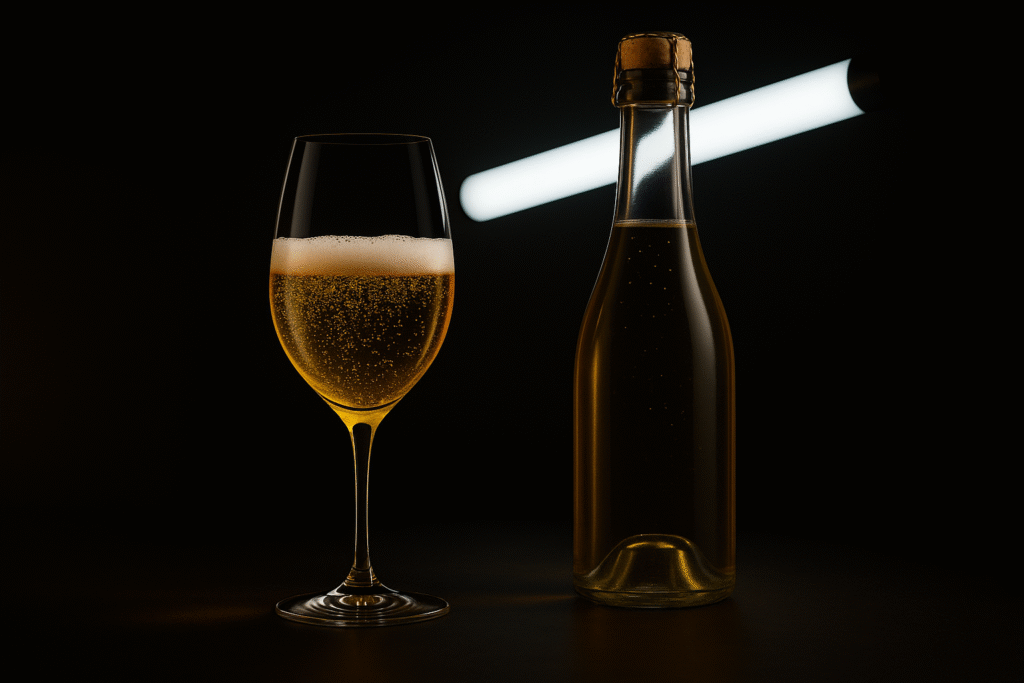
What is Lightstruck?
Lightstruck is a fault that occurs when champagne is exposed to light sources, whether natural or artificial. This exposure causes chemical reactions within the wine, affecting its aromas and flavor. White and rosé wines, especially those packaged in clear bottles, are the most vulnerable to this phenomenon.
Causes of Lightstruck
Riboflavin, or vitamin B2, is one of the main culprits behind this fault. When exposed to light, it degrades and produces volatile compounds such as methanethiol, responsible for unpleasant smells like boiled cabbage or rubber. This process can be triggered within minutes of sun exposure, making champagne storage crucial.
Symptoms to Watch For
The signs of lightstruck are not always obvious. At first, the wine may show a slight masking effect, softening its floral and fruity aromas. However, over time, more unpleasant notes may emerge, making the tasting less enjoyable. It is therefore essential to pay attention to odors and flavors when opening a bottle.
How to Avoid Lightstruck?
Prevention is key to protecting your precious champagne bottles. Here are some practical tips:
1. Choose the Right Type of Bottle
Opt for tinted glass bottles, such as green or brown, which offer better protection against light. Clear bottles, although attractive, are much more likely to develop this fault.
2. Store Properly
Keep your bottles in a dark place, away from direct light. Avoid exposing them to strong light sources such as neon lights or sunlight. If possible, keep them in their original box.
3. Avoid Prolonged Exposure
If you need to expose your bottles for a special occasion, limit the exposure time to light. Even a few minutes under intense lighting can be enough to alter the taste of champagne.
4. Use Suitable Lighting
If you are a wine professional, consider using LED lights specially designed to minimize the impact of light on wine. These lights emit fewer UV rays, thus reducing the risk of degradation.
The Effects of Light on Champagne
Impact on Aromas
Exposure to light can lead to a significant decrease in the aromatic intensity of champagne. Fruity aromas, which are often the hallmark of a good wine, can fade, giving way to less pleasant notes.
Wine Discoloration
Another visible effect of lightstruck is discoloration. <a href="https://pepites-en-champagne.fr/fr/champagneschampagnes exposed to light can lose their brilliance and become duller, which is a clear sign of degradation.
Comparison of Bottles
Studies have shown that clear bottles are the most vulnerable. Indeed, champagne placed in a clear bottle can develop faults in just two weeks of exposure, while green and brown bottles offer much better protection.
Innovative Solutions
Modern Technologies
With the evolution of lighting technologies, new solutions are emerging to protect champagne. For example, some champagne brands have started using protective films on their bottles to block UV rays.
Consumer Education
It is essential to educate consumers about the importance of champagne preservation. By understanding the risks associated with lightstruck, wine enthusiasts can make informed decisions when purchasing and storing their bottles.
Conclusion
Lightstruck is a challenge that every champagne lover must take seriously. By adopting proper storage practices and choosing the right type of bottle, it is possible to preserve the quality and integrity of this sparkling wine. So, the next time you open a bottle of champagne, remember these tips and savor every sip without fear of disappointment.
As you explore the fascinating world of champagne, remember that every detail counts. Whether it’s the choice of bottle, the storage method, or even the lighting, each element plays a crucial role in preserving this exceptional wine. So, raise your flutes and fully enjoy every sparkling moment!